THE Change: Transitioning Through Our 50s
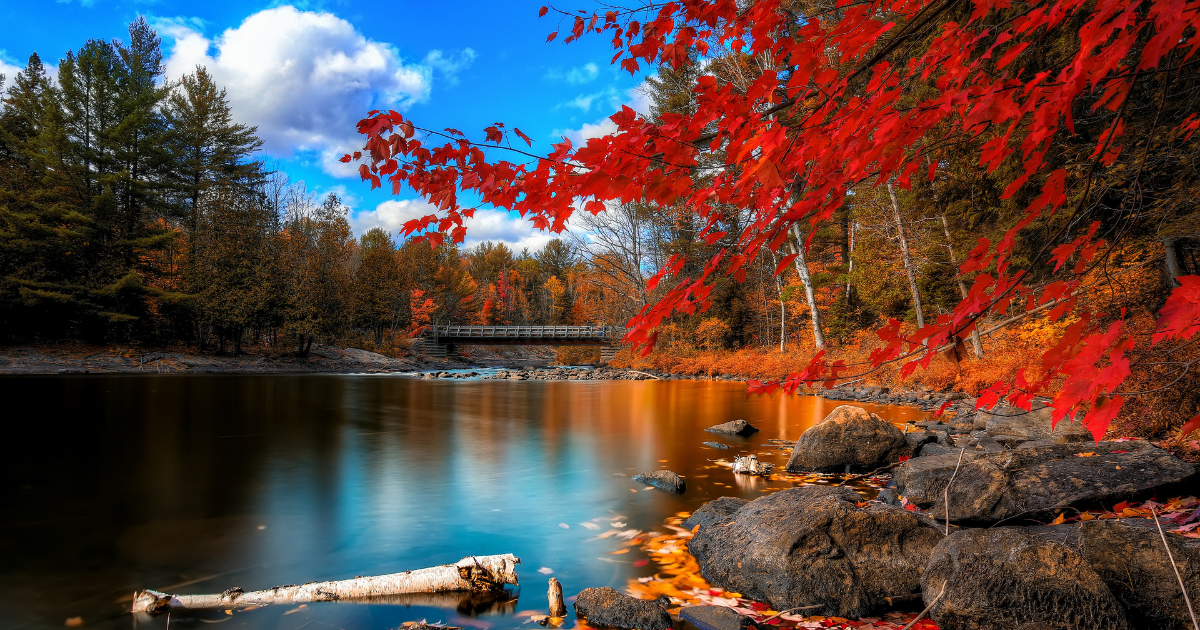
Autumn is finally here. It's my favourite time of year because I live in a place that bursts with colour from September to early November. Here in Nova Scotia, fall is characterized by rolling Hills surrounded by red, yellow, and orange leaves tumbling in the wind. I love going for drives in the fall and seeing nature's glorious palette before it settles into the deep rest of winter.
I have seen many Septembers in my lifetime, as it happens. I am past the middle of my life if I live to be 102 (as I plan to, of course). I've spent nearly a decade in my 50s, and it has taught me a lot about myself, my life and what this 'middle' part is meant to look like.
This decade of our lives is not as straightforward as the ones we've lived through before. In this series, we've talked about transitioning into adulthood in our early 20s, the decade of building in our 30s and our 40s, when we reach the reckoning of our lifetime, having enough experience to take a look around and see how far we've come.
Often, our 50s can feel like standing at a crossroads, with paths diverging into many possible futures. Some people are looking forward to early retirement, while others worry about where they are financially or whether they're capable of rest at all. Some have grandchildren and family that they want to pour their time and energy into, while others may still have teenagers at home.
It feels like the autumn of our life, when we need to decide how we will spend the winter. It has been the favourite season of my life so far.
THE Change
For ovulating individuals and their partners, the biggest challenge to contend with as we transition into this decade is THE change.
Menopause is the one life transition in the series that isn't chosen or built towards. It is a change that isn't as predictable or timely as puberty. However, both are raging with hormones and make us unpredictable, even to ourselves.
Menopause is often characterized by a loss of self. It's not the usual 'who am I' question that comes up earlier in life as we figure out who we are in relation to others around us. It's a loss of the person we understood ourselves to be, leaving us wondering who we are, internally, as our minds and bodies settle into something new.
The grief comes when you settle into a new sense of who you are, realize you finally know who you want to be, and feel like it's too late to pursue anything new.
Unlike in our 30s and 40s, when grief comes from missed milestones or unmet expectations, Menopause happens to the body regardless of what you have planned. There is grief in reconciling a body and identity that are changing without your permission, while pushing back against the patriarchal narrative that says Menopause is when a person's purpose has come to an end.
The Impending Sense of Dread
The year I turned 50, I spent time examining my life and getting comfortable with the knowledge that death was a shadow lurking more closely than I had paid attention to before.
I found myself wondering if I was living up to my potential. I wondered if my life had purpose or if I was making a significant contribution. That existential dread momentarily increased the need to be valuable to those around me.
What I realized, through writing and reflecting on my time here, is that we can choose to focus on ourselves and fall more deeply into who we are as Menopause passes and we become the 'final' version of who we are. As our relationships shift and change to make room for that new version of ourselves. It is a process of discovery, facing inward, focused on creating meaning.
I've talked before about expectations several times in this series. The expectations about how we think life should be and how it actually ended up can often keep us victims of our own circumstances, holding us back from finding purpose in life.
These external expectations do not necessarily reflect where we should be in our life, nor do they have our best interests at heart. By the age of 50, we often expect to have all of the answers, only to find that we end up with more questions than we did before.
We will never have all the answers.
As I now enter the last year of my 50s, I realize that's OK. Living is a journey, not a destination.
Meaning and Purpose Beyond Menopause
As a woman, the past decade has been a roller coaster. Reaching Menopause kicked up some underlying autoimmune issues, and I spent a lot of time struggling without the energy to live life as I had built it and hoped to enjoy in my later years.
I wish I could tell my past self that it's OK to slow down. It doesn't mean that you aren't active and engaged in life. You can work with where you are. There can be moments of grief over the life you had lived before or the milestones and expectations that have been placed on you and are yet unmet.
It becomes a time to slow down and enjoy the life we have built. We focus on our health and our joy. We shift from performance to longevity.
Rather than grieving what is lost (be it our sense of self or the body that didn't ache as much as it does now), focus on what you have and can maintain.
As I've discussed before when talking about stages of change, the last stage is maintenance.
For me, maintaining my life past THE Change has meant slowing down and finding the pace I'd like to live at for the rest of my life.
I still have goals and dreams, but I have learned not to rush to achieve them. That may mean I die with things incomplete, and that's a possibility I've become okay with in a way I could not have been in my earlier decades.
Happiness & Purpose Are Just Beginning
There's a U-curve in happiness that shows a dip in life satisfaction in our late 40s before it begins to rise again. If you find yourself there in that valley, where you are no longer satisfied with your life, it may feel as if you have reached the end of happiness, but take heart because a new dawn is on the horizon.
When you find yourself trapped in that unhappy feeling, try to focus on one intention for the day.
The biggest challenge is to find meaning in the day-to-day practice of living in a world that seems to reward haste and hustle. Instead move slowly, move with purpose, and take time to drink up this beautiful creation. While we're here, focus on being present with ourselves and the people around us rather than accomplishing.
Our 50s can ground us in this feeling of peace and of being ourselves. Throughout our life so far, achieving has been the focus, but now, instead of looking at external goals, we can listen to our soul and find purpose in simply existing.
Practices for Mid-life Contemplation
Embrace stillness
Find time each day to dedicate a few minutes to sitting in stillness. This can be uncomfortable when you first start; it can feel like doing nothing (and therefore achieving nothing), but that is the point. Take a few minutes to meditate, pray or sit in silence and just listen. You don't need to do anything. You just need to exist, that is enough.
Engage in Atelier Activities
Decide each week to take part in something simply for the sake of doing it rather than for the sake of achieving something. We spend so much of our life focused on what we can fit into every day to give us a sense of productivity. Instead, choose activities that do not produce anything except a feeling of peace and presence. That could be a walk in nature, listening to music, journaling, filling in colouring books, or doodling for the sake of doodling. It can be anything that fills you with joy, so long as it is not a task to be checked off.
Reevaluate Your Purpose
So much of our life is spent in service of others, but our 50s are when we can turn our focus inward and live in service to ourselves. Ask yourself: What brings you joy? What do you value? What keeps you present and fills you with a sense of peace?
So many of our values and sense of purpose in our 20s, 30s, and 40s are centred on external factors. We focus on our career, our family, hitting specific milestones, and fulfilling the hopes that other people have for us. Instead, focus on what your values are now. What actually fills you with a sense of purpose? Why do you choose the activities you do, and what do you want to do at this time in your life?
You don't have to wait until you're 50
The year that I turned 50, I had three classmates from high school pass away unexpectedly. I knew people died, of course. I was 5 when my grandpa died at age 52, but at the time it felt like his life was so long, yet I felt at the same age like I was just beginning.
We spend so much of our lives serving other people's goals and aspirations for us. It's easy to reach 50 and realize you have been living your life for other people.
But you don't have to wait until you're 50 to engage in any of these practices.
In this world, which is absolutely filled with chaos, finding purpose is how we build resilience and stay grounded in the moment. Do not wait until the end of your life to focus on yourself and what makes you happy. To find purpose in living for your own joy instead of constantly trying to be the source of others.
Over the next few months, I will be taking a break from blogging as I focus on writing the next book. So much of my life and career has been focused on helping people heal from trauma and find purpose. I look forward to spending the last quarter of this year writing about what comes after.
If there are any topics I have covered on the blog or on my social media that you feel connected to, please email me and let me know. I would love to expand on it further in the next book.
Until then, I will continue my updates through the newsletter and look forward to connecting more in the new year.